

Japanese marques team up
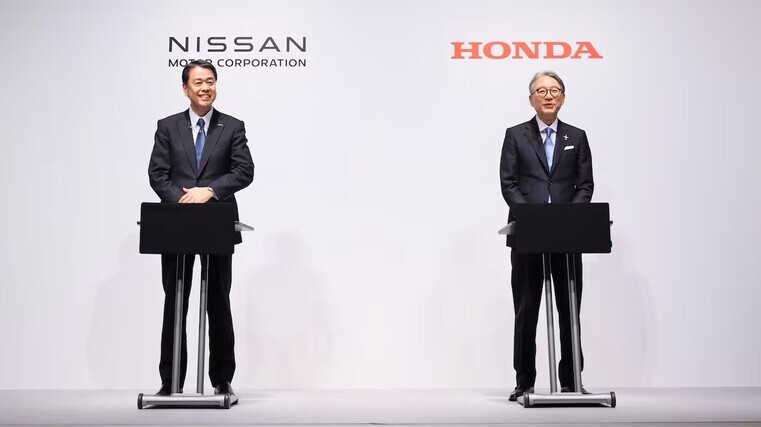
Honda and Nissan have finalised an agreement to jointly develop electronics hardware and operating systems for software-defined vehicles launching from 2029.
It revives collaboration efforts between the two carmakers after their failed merged as they bid to catch up with Tesla and Chinese rivals as they race to catch Tesla and rivals from China.
Under the deal, the two Japanese carmakers will develop and standardise multiple electronic control units (ECUs) which form the core of software-defined vehicles (SDVs) and in-vehicle operating systems as well as the control software that run the ECUs.
Nissan and Honda will establish common specifications for ECUs and the electric-electronic architecture of next-generation vehicles, and the middleware and vehicle control software.
The companies say: “The software domain centred on SDVs, which is key to vehicle intelligence and electrification, has been identified as an important area of collaboration given the rapid pace of technological innovation and need to strengthen competitiveness.”
They announced the shared strategy in early 2024 and then superseded loose co-operation with a proposed merger in December of the same year, but concrete projects have remained elusive after their planned merger ended in acrimony.
The Japanese carmakers are revisiting co-operation as they rethink EV development and manufacturing after falling behind competitors from China and Silicon Valley. Teaming with other carmakers is seen as essential achieving scale and sharing investment.
Nissan and Honda add: “Recognising the need to strengthen competitiveness through faster development cycles and more efficient investment, we have conducted extensive studies on potential collaboration in software.”
Working together will help the two brands spread out research and development investments, leverage a wider pool of engineering expertise and reduce costs through economies of scale.