

Major overhaul at VW
The Volkswagen Group has come to a supervisory board agreement on key targets to drive the business and its profitability.
The plans could reshape the carmaker and have a winder impact on a manufacturing industry that’s struggling to adapt to low-cost, high-tech rivals from China.
Investors have commended the profit targets and pledge to streamline operations across the company, which employs more than 600,000 people worldwide.
The outcome is surprising in its scope and unanimous board support given the debate over planned job losses and potential plant closures.
However, chief executive officer Oliver Blume has backed off from factory shutdowns and has pledged to first try to get the costs at uncompetitive sites in line with new targets or seek alternative uses for them.
What’s in the plan
• Financial targets – nine million vehicle sales annually, nine per cent margin and €31 billion profit.
• Cut the model range and reduce complexity – about half of the group’s products to be canned by 2035 with product complexity reduced by around 75 per cent.
• Co-ordinate efficiency improvements – a new operational excellence programme to link improvements across engineering, purchasing, production, quality, sales and overhead functions.
• Thin management and speedy decisions – leaner structures, clearer accountability and shorter approval chains.
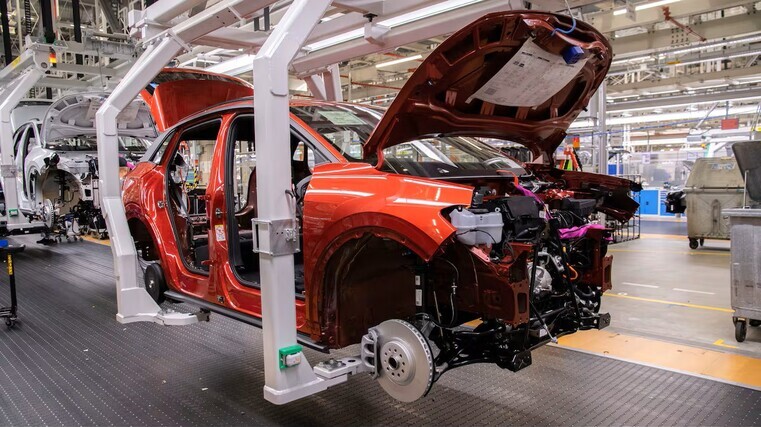
• Reshape the European factory network – by the end of June, the company intends to produce a plan for a sustainable and competitive European footprint. It has already singled out German plants in Emden, pictured above, Zwickau and Hanover, and Audi’s factory in Neckarsulm.
• Eliminate 50,000 more jobs worldwide – it attributes the cuts to global competition, changing demand and the technological shift in the industry.
• Refocus North America and resize China – in North America, VW says it will concentrate on the most profitable vehicle segments. In China, it will adjust the business to a weaker outlook for overall market growth while increasing exports from that country,
• Simplify the corporate structure – the supervisory board has asked management to design a group decision-making and corporate structure to unlock technology and purchasing synergies, clarify responsibility and accelerate management decisions.
• Sell or restructure roughly one-third of the holdings’ portfolio – VW plans to reduce its portfolio of investments and businesses by about 30 per cent, judging each by its strategic and financial contribution.
What remains unanswered
VW’s plan sets ambitious targets that define where it wants to go, but the agreement is more of a statement of intent than a final agreement.
Most consequential decisions have been pushed into later processes. These include the investment programme being validated, the factory plan isn’t due until June, workforce changes require negotiations and the new corporate structure has yet to be designed, reports Automotive News.