


MTA launches car-industry roadmap
The Motor Trade Association (MTA) is calling for major action to tackle national shortages of tradespeople and technicians.
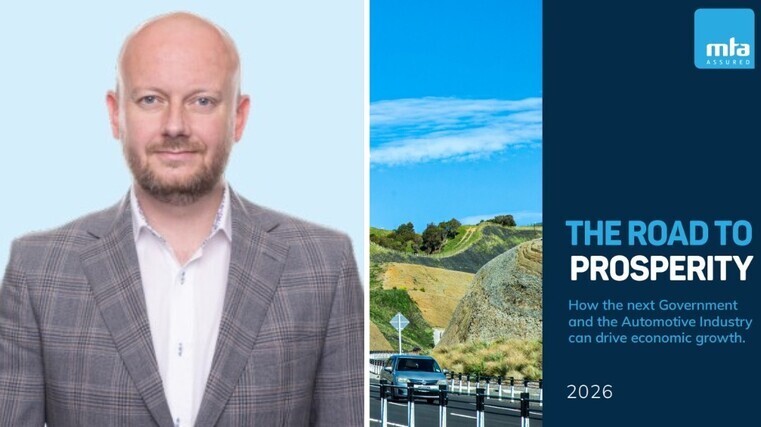
Among the initiatives it’s lobbying for is the creation of a national trades training fund (NTTF). The proposal is included in its pre-election manifesto, which is called The Road to Prosperity and was launched at parliament on July 1.
The in-depth document contains 20 calls for the next government and car industry to work together on to create economic growth and progress. These include:
• A $2,000 incentive payment for Kiwis to move from old vehicles that are 20 years-plus, to cleaner, newer ones less than 10 years old.
• Delaying the second stage interval reform for the warrant of fitness (WOF) regime.
• Amending the Consumer Guarantees Act and Motor Vehicle Disputes Tribunal.
• Prioritising fuel theft by including this area of crime in the Minister of Police’s letter of expectations to the Police Commissioner.
But back to the NTTF and tackling the skills shortage in New Zealand’s automotive industry. This new fund would be paid for with the estimated savings of between $150 million and $200m from the final-year fees-free scheme scrapped in this year’s budget. It would also involve canning Apprenticeship Boost.
In addition, the next government is being urged to target trades and technical roles underpinning transport delivery, infrastructure and fleet resilience. And barriers to tools and supervision support need to be removed so more young people sign up for apprenticeships.
As part of replacing the NCEA, all secondary trades programmes should include a mandated component delivered in workplaces because vocational learning is too classroom-based.
A funding mechanism is needed to support schools and employers, recognising the time and supervision cost employers absorb when taking on these learners.
As for importing talent, the MTA is calling for action from Immigration NZ (INZ), starting with its green list, which offers fast-track residency pathways.
It contends the current system can significantly lag real-time shortages, which creates delays and uncertainty for employers and migrants.
The association’s fix is a quota model with approved peak bodies managing an annual allocation of priority roles. It would entail industry organisations having an annual skills quota, and swapping roles in and out as needed by notifying INZ. In addition, settings under the accredited employer work visa process should be streamlined.
Scrappage scheme needed
The MTA is calling for targeted upgrade scheme as a “complementary safety and emissions lever” to reduce the age of the fleet.
This would mean giving a $2,000 allowance to Kiwis who surrender and permanently scrap a registered vehicle aged 20 years or older, with that money redeemable towards a newer replacement.
A rolling 20-year threshold would focus on getting the oldest cars out of the fleet. What replaces them will need to be 10 years old or newer.
Investing to boost EV uptake is being proposed by the MTA. It wants the current tax framework reviewed to recognise national fleet safety, productivity and decarbonisation benefits created when companies acquire EVs.
The MTA adds that through Investment Boost, introduced in Budget 2025, electric vehicles’ current depreciation rate should be doubled to 40 per cent. Eligible models would be BEVs bought as business assets.
Also on the environment, the MTA wants a battery product stewardship scheme rolled out using Tyrewise as a model for success. While electrified vehicles look set to cut transport emissions, the absence of a system to manage old batteries poses a big risk.
Light-vehicle inspections
Recent coalition reforms mean two-yearly WOFs for vehicles up to 14 years old will be phased in from November 2026.
The MTA is calling on the next government not to automatically proceed with the second phase of the reforms, which is extending biennial WOFs to vehicles aged seven to 14 years. At minimum, this needs to be delayed by two years so data from other changes can be assessed.
It adds public consultation should be started on mileage-based inspections alongside the move to digital and universal road-user charges.
Tackling regulations
The MTA has convened a cross-industry workforce to investigate New Zealand’s “unique market when it comes to right to repair”.
It’s lobbying for a legislated tiered-access framework that considers what’s best for consumers, vehicle importers and the repair sector in a fair, balanced and reasonable way.
The association also wants the Motor Vehicle Disputes Tribunal expanded so it can hear repair and workmanship disputes, and for adjudicators to make allowances for depreciation under the Consumer Guarantees Act.
It adds a mandatory franchising regime is needed, as well as active enforcement of existing unfair contract terms safeguards to benefit smaller parties.
Views from the top
Chief executive Lee Marshall says sectors represented by the MTA contribute about 1.9 per cent of GDP, but such numbers fail to paint a full picture.
“Every workshop, dealership, parts distributor, collision repairer and service station plays a vital role in enabling the nation,” he adds.
“Drawing on recently conducted research commissioned by the MTA, our advocacy calls are based on extensive data and insights of industry experts and leaders.
“The results of the research challenged conventional thinking in several areas but landed on two overarching conclusions – the automotive industry is integral to our country and the industry, strong as it is, faces headwinds the government and sector must overcome.
“The MTA’s vision is for a thriving and progressive automotive industry. That means a skilled workforce that can meet tomorrow’s demands, a safer and cleaner fleet that protects people and our environment, a fair regulatory playing field that rewards innovation and entrepreneurship, and a focus on the rising tide of crime undermining service stations and community safety.
“We also call for parties to work together for the productivity, safety, environmental and enablement outcomes industry needs. A polarised approach by government that seeks only to reverse the policy of its predecessors serves no one.”
Sturrock Saunders, the MTA’s president, adds: “This year, political parties of every hue are rightly focused on delivering growth and prosperity. The MTA, its members and the wider automotive industry share that vision. But we can do more than that. We can drive and can deliver it.”