

Low-emissions cars boost
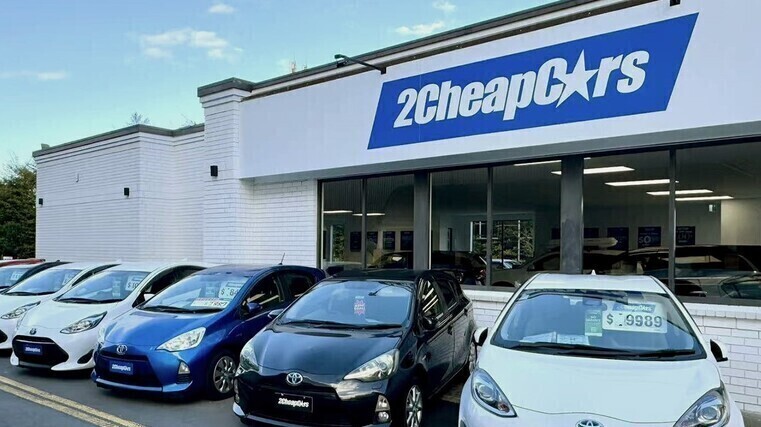
Registrations of used-imported hybrid cars and EVs continue to make up a “significant and growing proportion” of 2 Cheap Cars’ business.
Such models averaged 61 per cent of its total sales in 2025/26, up from about 50 per cent in 2024/25.
While the mix eased slightly in the final quarter, demand stayed strong during the past financial year, “reflecting a clear customer preference for more fuel-efficient vehicles and the group’s ability to adjust sourcing through its direct procurement capability in Japan”.
It says this shift highlights the importance of maintaining a flexible sourcing model, and a product mix that reflects buyer affordability, fuel-efficiency preferences and ongoing impacts of the clean car standard (CCS).
“2 Cheap Cars’ core business continues to support the transition to lower-emissions transport through the sourcing, promotion and sale of hybrids and EVs, alongside the company’s own environmentally responsible operational practices,” states its annual report.
“As a recognised participant in the low-emissions market, 2 Cheap Cars continues to sell significant volumes of electric and hybrid vehicles.”
The company retailed 4,410 EVs and hybrids in the past financial year compared to 3,873 in 2024/25. Overall vehicle sales reached 7,239 versus 7,675.
Gross margins dropped by one per cent to 21 per cent, “reflecting the continued impact of regulatory pressures”. That said, momentum gathered “significantly” in the second half, “driven by stronger margins, improved procurement conditions, and outstanding finance and insurance [F&I] performance”.
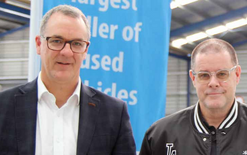
Michael Stiassny, chairman, and chief executive officer David Sena say the 2026 fiscal year made for a “demanding landscape for the used-car sector marked by rising regulatory costs, subdued consumer sentiment and broader economic headwinds that tempered demand during much of it”.
Despite these challenges, 2 Cheap Cars delivered a “robust” performance, achieving a net profit after tax (NPAT) of $3.2 million. This met guidance issued in January, which projected full-year NPAT to surpass $3m.
“This result underscores the strength of our vertically integrated operating model and impact of key operational initiatives implemented,” explain Sena and Stiassny.
“Revenue and income remained steady at $81.7m, a slight decline of 0.3 per cent from financial year 2025 even as vehicle volumes softened and industry-wide pricing pressures persisted.
“Profitability was notably affected by higher carbon-credit costs under the CCS, which reduced year-on-year NPAT by about $1.7m. However, adjustments to carbon-credit settings in the final quarter provided relief with reduced costs supporting profitability for vehicles imported and sold under the revised framework.”
The group’s record-breaking F&I results saw its insurance penetration rate reaching an all-time high of 44 per cent, up from 36 per cent compared to 2024/25, and finance’s rate rising from 27-31 per cent. “This success was fuelled by disciplined sales execution and a more stable consumer financing environment.”
The company maintained its “strong footing” by generating $4.2m in net operating cash inflow. “In line with our dividend policy, the board declared a final gross dividend of 3.99 cents per share, bringing total gross dividends to 6.1cps.”
The group has continued to invest in initiatives to enhance long-term capability and buyer engagement. Its main efforts in 2025/26 included:
• More investment in direct-to-consumer marketing channels to build stronger relationships and reduce dependence on third-party platforms.
• Strengthening brand capability to reinforce its market position and differentiate its offering.
• Enhancing digital-engagement initiatives to improve online experiences and streamline the car-buying process.
“These moves are expected to reduce reliance on third-party listing platforms over time, enabling us to better control our brand narrative and customer interactions,” explain Stiassny and Sena.
“By focusing on bigger, better-located car yards and digital innovation, we’re confident in our ability to drive improved sales efficiency, customer satisfaction and long-term profitability.”
The company has started the 2027 financial year “with strong early trading momentum and a continued focus on disciplined execution, operational efficiency, direct-to-consumer marketing and balance-sheet strength”.
Looking ahead, 2 Cheap Cars is well-positioned to benefit from investments it made in 2025/26. For example, its new branch at Sylvia Park in Auckland will provide a full-year contribution in 2026/27.
“We’re also strengthening our operating platform with an increased focus on Christchurch, including the establishment of dedicated refurbishment capacity and additional operational leadership in the region.
“In Auckland, we are rebalancing internal and external compliance and refurbishment activity through the hub [in Onehunga] to improve efficiency, control and speed to market.
“Further opportunities exist through digital capability, increased own-channel lead generation, continued F&I contributions and disciplined inventory management. The company is also exploring further network opportunities to support future volume growth and customer reach.”
Crunching the numbers
2 Cheap Cars recorded total revenue and income of $81.7m for the year ending March 31, broadly in line with financial year 2025. Revenue from car sales increased slightly to $73.4m despite lower volumes and reflecting stronger average retail pricing.
F&I agent commissions rose by 17 per cent to $7.9m for “a strong result in a softer retail market”. It also reflected improved sales discipline, a more stable consumer finance environment and record insurance penetration.
Income from F&I remained “broadly stable” at about $400,000 notwithstanding the continued run-down of the NZ Motor Finance loan book.
Other income reduced significantly from 2024/25, “reflecting the prior year recognition of carbon-credit income that didn’t repeat in financial year 2026” when it also became a net user of carbon credits, which were used to offset CCS obligations.
Contribution margin during 2025/25 was $17.4m, down by two per cent from $17.8m. This decline reflected ongoing margin pressure across the used-vehicle sector. These included the impact of elevated CCS carbon-credit costs, which were “most pronounced in the first half and had a material impact on year-on-year profitability”.
Despite these pressures, the group delivered a stronger second-half trading performance backed by improved procurement conditions in Japan, stronger margins, disciplined pricing and operational efficiencies. “However, the modest decline in contribution margin, despite challenging conditions, demonstrates the resilience of the group’s vertically integrated operating model.”
NZ Motor Finance’s loan book has continued to be run down. Its value reduced from $700,000 on March 31, 2025, to $200,000 by the end of the same month this year, while active loans reduced from 98 to 71.
No new lending occurred in 2024/25 with the business continuing to focus on collecting outstanding loan receivables and managing the remaining book through to completion. “The book is now small relative to the group’s overall operations and will continue to reduce.”
The group reported NPAT of $3.2m for the 2026 financial year, which was down by three per cent from $3.3m in the previous 12-month period.
“Carbon-credit costs had a material year-on-year impact particularly compared with financial year 2025, which benefited from the recognition of carbon-credit income. These headwinds were partly offset by improved second-half momentum, stronger margins, higher F&I penetration and continued operating cost control”.
Revenue and income remained steady at $81.7m while contribution margin reduced by two per cent to $17.4m. Operating expenses reduced by five per cent to $9.4m. Depreciation and amortisation increased by 10 per cent, reflecting investment in the group’s retail network, systems and operating platform.
Underlying NPAT was $3.2m with no non-recurring costs or one-off items during the year. “Overall, the result demonstrates the resilience of the group’s operating mode. Underlying EBITDA increased by one per cent to $8.1m from $8m.”
Cash flow from operating activities was $4.2m compared with $6.7m during 2024/25. The reduction primarily reflected increased investment in inventory, which rose to $18m by March 31 “supporting vehicle supply and customer choice across the retail network”.
Free cash flow was $3.7m versus $6.4m. Investing cash outflows were slightly higher than the prior year. The group invested $1.3m in its retail network in 2024/25. However, this was partially offset by a one-off reduction in lease-guarantee deposits following a new funding agreement with ANZ.
Cash and cash equivalents were $3.8m at year-end. The business remained compliant with banking covenants and maintained a “strong liquidity” position.
And did you know? The subsidiaries of 2 Cheap Cars Group Ltd are 2 Cheap Cars Ltd NZ, NZ Motor Finance Ltd NZ, 2CC International Ltd NZ, Cheap Rental Cars NZ Ltd, Car Safety NZ Ltd and Car Plus KK, which is based in Japan.