

Transport minister packs bags
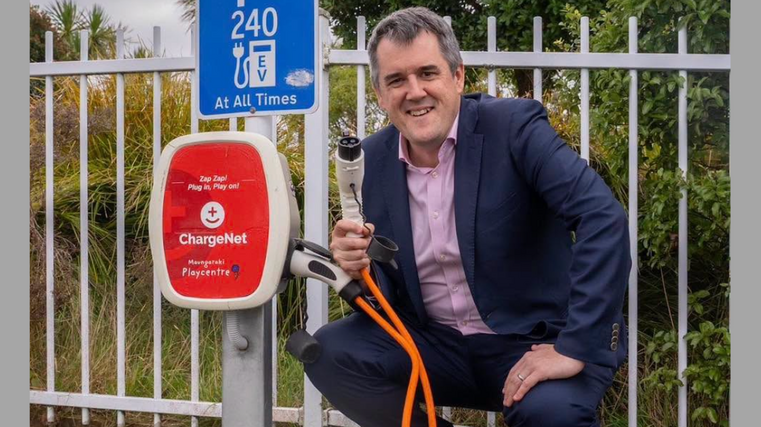
Chris Bishop, Minister of Transport before election day, has conceded his return to parliament is unlikely after running second in the Hutt South electorate to Labour’s Ginny Andersen.
After all the preliminary votes had been counted on November 7, Andersen was ahead by 889 although Bishop told supporters at his election party in Eastbourne to “never say never”, suggesting things could change on special votes.
No National candidates from the party’s list – Bishop was number three – will make it into parliament because of its low party vote result proportional to the number of electorates it secured.
Bishop’s future hinges on the official results, which will include special votes and are a few weeks away. He is also the Attorney-General, Minister of Housing, Minister for Infrastructure, Minister Responsible for RMA Reform and Associate Minister of Finance.
A similar fate awaits Nicola Willis, Minister of Finance and deputy leader. She also holds the portfolios for economic growth and social investment.
Also likely gone is sixth on the list Paul Goldsmith, who stood against Act leader David Seymour in the Epsom electorate, Auckland. He has multiple portfolios in the coalition, while Parliamentary Speaker Gerry Brownlee finds himself in the same boat without much of a paddle.
Bishop told his supporters: “If I do go on to lose Hutt South, I won’t be an MP in the next parliament, obviously, and not a minister in the next National-led government as well. You know, that’s soul destroying, it’s soul destroying.”
Bishop was behind Andersen for most of the night as the numbers rolled in, but by differing margins. He sat with his campaign team refreshing the results on a laptop and at one point was heard saying “f***ing hell, it’s tight”.
National’s leader, Christopher Luxon, has denied snubbing Bishop in his election night speech. When he faced a leadership challenge in August, Chris Penk, former Minister of Defence, was singled out as the lone instigator but Bishop had to answer questions about his possible complicity behind the scenes.
He and Luxon denied any involvement by Bishop in the attempted coup, but his absence from the PM’s speech on election night has drawn questions. “Don’t misinterpret that as any snub against Chris at all,” Luxon said the next day.
Luxon adds Bishop had not conceded when he delivered his remarks and he hopes the result could be turned around. “We still felt there was a chance, with some of those booths still to come in, that it may go the other way.”
The PM describes Bishop as an “outstanding minister”, who would be a significant loss to National and parliament.
Luxon, meanwhile, has given his clearest indication yet that he’s open to working with Opportunity if National gets the chance to form the next government.
With the preliminary election results giving the right bloc an estimated 67 seats in a 131-seat parliament, he is confident he can form a government with existing coalition partners Act and New Zealand First.
Luxon says coalition talks will start when official results are released on November 27. But depending on special votes, he may require the backing of Opportunity, which secured six per cent of the provisional party vote and is on track to have seven list MPs. Luxon first ruled out working with Opportunity in July and did so countless times on the election trail.