


Tax plan for cleaner cars

Drive Electric and Rewiring Aotearoa are asking political parties to commit to assessing a New Zealand pre-tax EV leasing pathway within the first 100 days after the election, with the fiscal and tax settings tested before adopting any scheme.
The two organisations want the next government to test whether a New Zealand version of an EV Salary Boost scheme could help more workers access electric vehicles without creating an open-ended cost to taxpayers.
The proposal would allow eligible employees to lease an EV using pre-tax salary, similar to novated leasing across the Tasman.
Rewiring Aotearoa and Drive Electric are not asking for the Australian model to be copied but want New Zealand to test how a scheme could work within existing PAYE, fringe-benefits tax (FBT) and GST settings with clear limits on fiscal exposure.
“High fuel prices show how exposed households and businesses are to costs set offshore,” says Kirsten Corson, chair of Drive Electric. “The question we’re asking parties to examine is whether New Zealand’s tax settings can give more workers access to lower-running-cost vehicles without creating an open-ended cost to the crown.”
Fuel prices have renewed attention on transport costs with the national average price of 91 petrol recently climbing to its highest level since late May.
Terry Collins, the AA’s principal policy adviser and fuel spokesperson, has warned prices could remain elevated through to Christmas.
The country’s reliance on imported refined petrol, diesel and jet fuel leaves households and businesses exposed to global fuel markets, with Stats NZ reporting that petroleum and petroleum product imports were worth $12.1 billion in the year ended July 2026, up 23 per cent on the previous year.
According to the Ministry for Business, Innovation and Employment (MBIE), New Zealand relies on imported refined liquid fuels. By contrast, 88.5 per cent of electricity generated in 2025 came from renewable sources, making electrification a practical way to reduce exposure to imported fuel costs.
And the Energy Efficiency and Conservation Authority (EECA) says an EV charged at home off-peak can have an energy running cost equivalent to about $1.60 per litre of petrol, including road-user charges.
Drive Electric and Rewiring Aotearoa say the proposed EV Salary Boost is intended as one possible access pathway for workers who may not have the upfront capital to buy a new or late-model EV. It would sit alongside, rather than replace, wider transport, vehicle and charging policies.
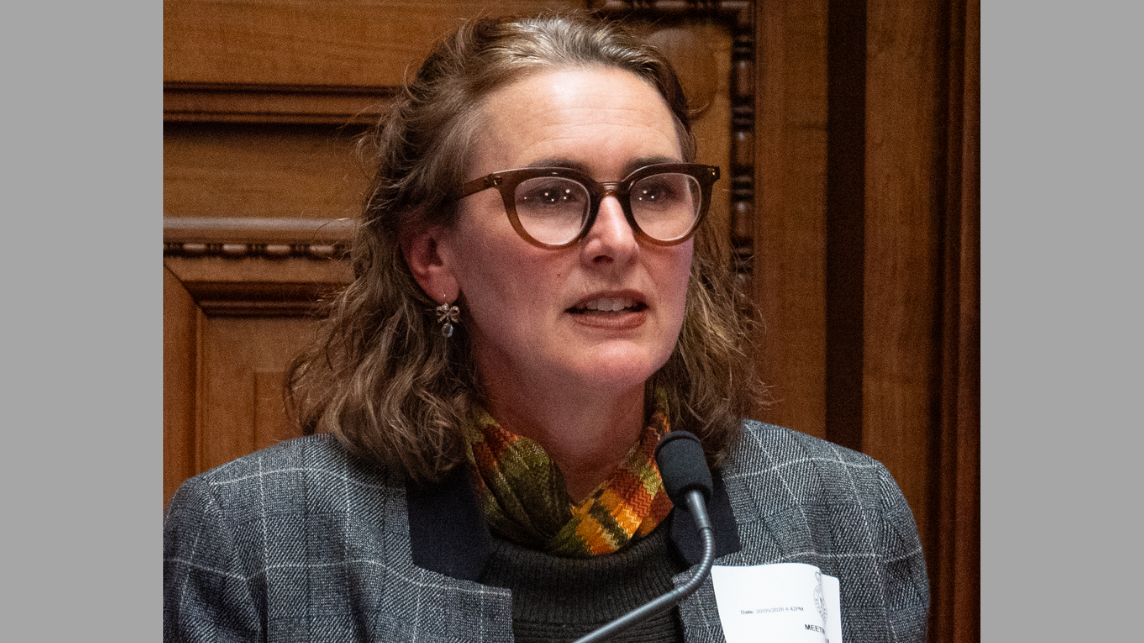
Corson, pictured below. says: “Last year, New Zealand spent $12.1b importing petroleum and petroleum products. Every time conflict flares on the other side of the world, that bill can climb and households pay for it at the pump.
“An EV Salary Boost would put a cleaner, cheaper-to-run vehicle within reach of more working New Zealanders. Every car that switches makes us a little less exposed to the next global fuel shock. Australia is already using this kind of model. New Zealand should assess how it could be adapted here.”
Evidence from across Tasman
Financing a vehicle through pre-tax salary – known across the ditch as novated leasing – is not new or experimental. It has been part of the Australian remuneration landscape for close to 40 years, growing out of a FBT framework introduced in the 1980s.
According to the National Automotive Leasing and Salary Packaging Association (NALSPA), the scheme is used by more than an estimated 500,000 Australians for vehicles of every kind. What is comparatively new is the EV-specific setting layered on top of that model.
From July 2022, the federal government exempted eligible electric cars from FBT when provided through a novated lease or by an employer.
A statutory review of the policy, published in May 2026, found it had been successful. It estimated the discount generated around 64,000 additional battery EV (BEV) sales in its first three years or up to 78,000 including plug-in hybrids (PHEVs) – about one-quarter of all EV sales over the period. The results since the policy started in July 2022 have been substantial:
• BEVs and PHEVs rose from 1.8 per cent of new-car sales in May 2022 to 22.9 per cent in March 2026. BEVs alone reached a record 24.9 per cent of new-vehicle registrations in August 2026.
• The number of EV models on sale grew from 56 to more than 160 by late 2025, including units priced at less than AU$40,000 (about NZ$49,500) rising from two to 10.
• More than 100,000 Australians have now used the exemption and NALSPA estimates around half of all EV sales go through a novated lease.
• The review valued the benefits at around AU$1.1b in fuel savings and AU$430 million in health benefits from reduced air pollution.
Drive Electric and Rewiring Aotearoa say Australia’s experience shows the appeal of the policy and the importance of designing it carefully, including through vehicle price caps and by continuing to collect GST from EV purchases.
However, the review cautioned about significant uncertainty around its estimates and that the EV market was influenced by other factors, including easing supply constraints, global market growth, falling technology costs, charging infrastructure and other policy settings.
Australia’s Treasury originally forecast the EV FBT exemption would cost about AU$90m in 2025-26. More than 100,000 Australians have since used it and the cost was expected to reach AU$1.35b in the 2025-26 financial year.
In May 2026, the federal government responded by recalibrating the scheme. From April 2027, EVs priced above AU$75,000 will move to 75 per cent of the standard FBT rate, with this extending to all eligible EVs by April 2029.
The adjustment is expected to save AU$1.7b over five years while keeping the full exemption for EVs under A$75,000 until April 2029.
Drive Electric and Rewiring Aotearoa say that’s the type of discipline New Zealand should apply from day one with fiscal caps and eligibility limits built into the design from the start.
Boosting second-hand market
Australia’s experience points to a second, less-discussed benefit of a growing supply of affordable, late-model used EVs.
Novated leases typically run for two to four years. According to vehicle remarketer Pickles, when a novated lease ends, roughly one-third of vehicles are sold, one-third are re-leased for a further six to 24 months, and one-third are retained by employees for one to three years before re-entering the market.
Used EV sales in Australia were up 54.6 per cent year-on-year during the first half of 2026. A scheme designed to get new electric cars onto driveways today is, after a lag of a few years, also one of the most direct ways to build the supply of affordable used EVs tomorrow.
“The main purpose of this scheme is to help those who could most use the savings to access EVs,” says Mike Casey, pictured below, chief executive of Rewiring Aotearoa.
“Australia got a lot right by taking a tool it already had, salary packaging, and pointing it at EVs. But some settings added to the cost, including allowing novated-lease buyers to avoid GST on the vehicle and including very expensive vehicles. New Zealand has the chance to tailor a scheme to our own tax settings from the start.”

Why it matters for Kiwis
The case for New Zealand looks, if anything, more urgent. Drive Electric’s State of the Nation Report 2026 shows EVs make up 3.3 per cent of the national light-vehicle fleet – 138,626 put of 4.3 million units. New-EV sales fell from 20 per cent of the new-car market in 2023 to less than 10 per cent in 2024 after the clean car discount was canned.
The report also shows choice has improved with 260 EV models now sold in this country, up from 152 three years ago.
Prices have fallen as battery costs have reduced and new EVs now start at $29,990, but they remain out of reach for many households, which typically shop below $15,000 for a car.
A well-designed EV Salary Boost scheme, using pre-tax income in a similar way to Australia’s novated leasing model, could open a realistic path to a newer, better EV for a broader range of working New Zealanders.
Rewiring Aotearoa and Drive Electric add this includes essential workers, tradespeople and middle-income families currently priced out of the new and used EV markets.
On Australia’s evidence, it could also help build the larger second-hand EV market that would eventually make EVs the cheaper choice for more households. At a time when the cost of living remains front of mind for New Zealanders, the running-cost case adds to the argument.
According to EECA, charging an EV in New Zealand costs substantially less than petrol on a per-kilometre basis. Thanks to an electricity system dominated by low-cost hydro, geothermal and other renewables, that cost is set largely at home rather than on a global market. Rooftop solar can reduce it further.
Call to next government
Drive Electric and Rewiring Aotearoa are asking parties that may form the next government to commit, before the November 7 election, to formally assessing an EV Salary Boost scheme within the first 100 days of getting into power.
They want that work to cover the full fiscal cost and options for a clear fiscal cap, treatment under PAYE, FBT and GST, and employee and employer eligibility, including whether new and used EVs should qualify.
Additional issues include vehicle price caps, lease terms and consumer protections, what happens when an employee changes jobs, and impacts on access, equity and the future second-hand EV market.
Drive Electric says an initial Deloitte paper on tax considerations has already been completed and shared with political parties.