


Profits up as sales fall
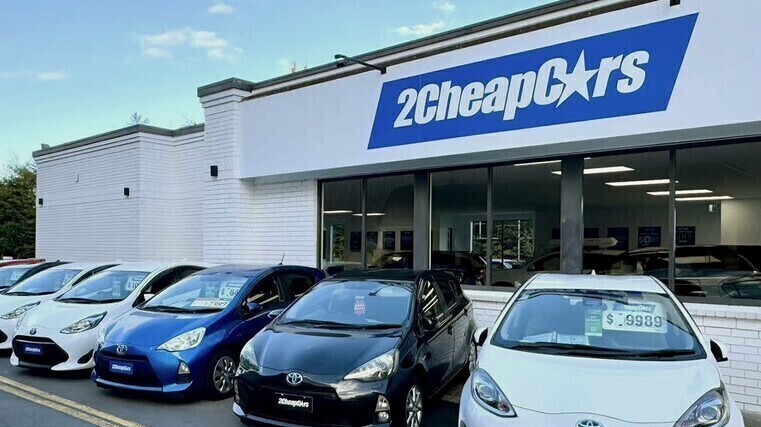
2 Cheap Cars has reported net profit after tax (NPAT) of $3.2 million for the fiscal year to March 31, “demonstrating the resilience” of its vertically integrated operating model despite challenging market conditions and higher clean car standard (CCS) costs.
The result was underpinned by a “significant” improvement in trading momentum during the second half of 2025/26 as stronger vehicle margins, improved procurement conditions, and record finance and insurance (F&I) penetration rates contributed to improved profitability in the final quarter.
The financials are in line with guidance provided in January when the company advised full-year NPAT was expected to exceed $3m.
Revenue and income during the past financial year come in at $81.7m, which was down by 0.3 per cent when compared to 2024/25. Gross margin was $17.4m and down by two per cent, while vehicle sales were 7,239 compared to 7,675.
Earnings before interest, taxes, depreciation and amortisation, including finance income, came in at $8.1m for a rise of one per cent. NPAT was $3.2m compared to $3.3m.
Overview of performance
The company says its results for 2025/26 reflect “solid performance amid a challenging operating environment” for the used-vehicle sector.
Elevated regulatory costs, subdued consumer confidence and soft economic conditions impacted demand throughout much of the financial year.
Profitability was materially impacted by increased carbon-credit costs under the CCS, which adversely affected year-on-year NPAT by approximately $1.7m relative to financial year 2025.
“Despite these hurdles, trading materially improved during the second half. The group benefited from improved procurement conditions, and achieved stronger margins and robust F&I penetration rates” the firm adds.
“Revenue and income were $81.7m, broadly in line with financial year 2025 despite softer overall vehicle volumes and continued pricing pressure.
“Gross margin declined by two per cent to $17.4m reflecting ongoing margin compression – primarily because of carbon-credit costs – through the first half of financial year 2026. This was partially offset by improved second-half trading performance and operational efficiencies.”
The group maintained strong F&I penetration rates – insurance rates hit a record 44 per cent, up from 36 per cent in the year prior – during the second half, supported by disciplined sales execution, improving procurement conditions and a more stable consumer-financing environment.
“Changes to carbon-credit settings under the CCS also contributed positively during the last quarter with reduced carbon costs supporting profitability on vehicles imported and sold under the revised settings.
“The company’s direct-sourcing model, via subsidiary Car Plus KK in Japan, continued to support superior inventory quality, procurement flexibility and margin optimisation,” it says.
“Operating expenses remained tightly controlled throughout the year despite ongoing inflationary pressures across rent, employment, compliance and utilities costs.
“The group also continued to refine its operating model, including the adoption of a hybrid compliance strategy combining internal capability with selected outsourced providers to improve flexibility and efficiency.”
Net operating cash inflow was $4.2m compared with $6.7m in financial year 2025. Inventory increased to $18m as at March 31, 2026, “reflecting continued investment in superior direct purchasing opportunities through the company’s Japanese subsidiary”.
As at March 31, 2 Cheap Cars remained compliant with all banking covenants, and held cash balances of $3.8m and total equity of $22.2m.
Strategic update
The company says it’s continuing to invest in initiatives to strengthen long-term capability and improve customer acquisition efficiency.
During the past financial year, this included increased investment into direct-to-consumer marketing channels, strengthening brand capability and enhancing digital customer engagement initiatives aimed at reducing reliance on third-party listing platforms over time.
Chief executive David Sena says the improved second-half performance demonstrates the resilience of the business and benefits of operational initiatives implemented.
“While the market environment remained difficult for much of the year, we saw positive momentum through the final quarter driven by improved margins, robust F&I penetration and better procurement conditions,” he adds.
“Our vertically integrated sourcing model and disciplined operational focus continue to position the business well despite ongoing volatility across the automotive sector.”
2 Cheap Cars declared a final gross dividend of 3.99 cents per share, bringing total gross dividends to 6.14c. It says the final dividend represents about 60 per cent of second-half NPAT in line with the company’s stated policy.
Based on a share price of $0.62 as at the announcement date, the total gross dividend for 2025/26 represents a yield of around 9.9 per cent.
Outlook for 2 Cheap Cars
The company says early performance for 2026/27 is encouraging and reinforces confidence in the group’s trajectory and resilient market positioning. While demand will likely continue to be shaped by geopolitical events and domestic inflation, it remains “prudently optimistic”.
It adds: “2 Cheap Cars’ strong brand position, which is well-suited to a recessionary market, will enable it to navigate external factors likely to continue influencing trading conditions through financial year 2027, including interest rates, fuel and shipping costs, and ongoing regulatory settings under the CCS.”
Chairman Michael Stiassny says the group is “well-positioned to continue to navigate market volatility” thanks to its disciplined inventory management, flexible sourcing strategies, and focus on operational efficiencies, cash-flow management and balance-sheet strength.
“We are running a tight ship, and while broader market conditions remain impossible to predict, the improved trading momentum coming into the new financial year is encouraging.”