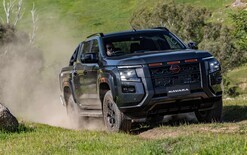


Cars exempt from new tariff
Vehicles and parts already subject to motor-vehicle tariffs are exempt from a new 15 per cent global tax issued on February 21 by Donald Trump.
One day before that, the US president announced a 10 per cent worldwide tariff hours after the Supreme Court ruled many of his previous import taxes illegal.
“I will be, effective immediately, raising the 10 per cent tariff, many of which have been ‘ripping’ the US off for decades without retribution (until I came along) to the fully allowed, and legally tested, 15 per cent level,” he said in a social-media post.
The initial 10 per cent tariffs Trump announced February 20 were slated to go into effect on the 24th of this month, according to the White House.
Imports of steel, aluminium and copper into the US are excluded from the new tariff. In addition, it doesn’t apply to goods from Canada and Mexico that comply with North American trade rules.
The exemptions are a win for carmakers and suppliers that urged the White House to keep the status quo on vehicles and metals tariffs after the Supreme Court ruling. Those goods, subject to other duties, had been exempt from most nation-level tariffs Trump implemented in 2025.
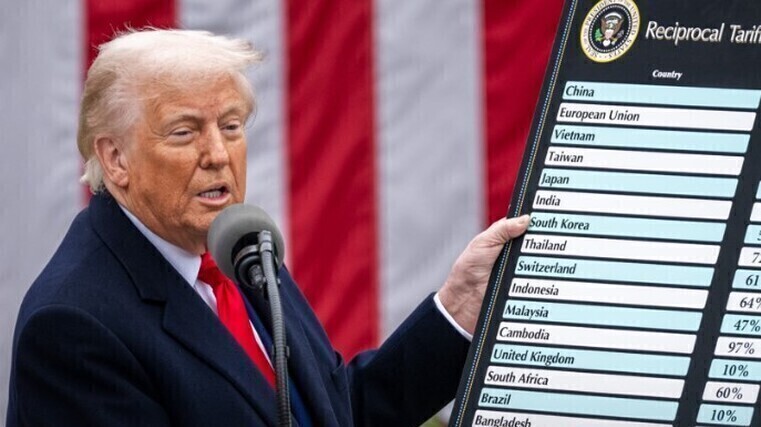
The new global tariff will remain in effect for 150 days under the rules of the statute Trump, pictured above, cited in implementing it.
It was on February 20 that the US Supreme Court ruled many of Trump’s tariffs to be illegal but stopped short of saying whether or how the federal government must refund businesses for duties paid.
The court’s six-to-three decision only relates to tariffs issued by Trump under the International Emergency Economic Powers Act 1977. Those include national-level “reciprocal” tariffs the White House imposed on imports that vary from 10-50 per cent, and those the president said he placed on Canadian, Mexican and Chinese goods in response to fentanyl trafficking.
Tariffs issued under other authorities, including duties on vehicles, automotive parts, steel, aluminium and copper remain in effect, and are not impacted by the ruling.
In addition to the temporary global tariff, the White House will launch investigations into unfair foreign trade practices, which could result in more tariffs, according to Trump.
Impact on car industry
The Supreme Court’s decision could have significant impacts on carmakers and suppliers. The automotive industry industry paid about US$8.6 billion – or about NZ$14.46b – through to October 2025 in duties now deemed unconstitutional, according to PwC.
The government also collected US$29b on imported industrial and manufacturing goods under the now-illegal tariffs in that time, reports Automotive News.
US trade group, the Motor and Equipment Manufacturers Association (MEMA) says its “respects and welcomes” the Supreme Court’s decision.
A spokesman adds: “Throughout the past year, MEMA has worked with policymakers to share data and real-world examples illustrating how these tariffs affected vehicle suppliers across the country.
“Suppliers operate within a deeply integrated North American supply chain, and policy changes of this scale have broad and complex implications for production, investment and competitiveness.”
The federal government has collected about US$314.4b in total duties, taxes and fees since the start of 2025, according to an estimate by US Customs and Border Protection. Around US$133.5b was collected under the emergency powers law.
The court’s majority, including its three liberal justices and three of its six conservative justices, say the president doesn’t have authority to issue tariffs under the law. Trump was the first president to assess tariffs under the law, which previous administrations have used to impose sanctions on other nations.
“The president asserts the extraordinary power to unilaterally impose tariffs of an unlimited amount, duration and scope,” Chief Justice John Roberts wrote for the majority. “In light of the breadth, history, and constitutional context of that asserted authority, he must identify clear congressional authorisation to exercise it.”
In response, Trump says he will implement the global tariff under section 122 of the Trade Act 1974, which allows a president to place a duty of up to 15 per cent on all countries in response to “large and serious US balance-of-payments deficits.”
Trump is the first president to invoke Section 122. The tariff will remain in place for 150 days unless Congress votes to extend it under the rules of the statute.
The president adds the White House will also immediately launch investigations into unfair trade practices under section 301 of the Trade Act, which could result in future tariffs. Trump in his first term used Section 301 to implement tariffs on goods from China.
Trump has indicated the White House will continue to collect tariffs under section 232 of the Trade Expansion Act 1962, which he has used to impose sectoral duties.
The law allows the president to implement tariffs for national security purposes following investigations conducted by the US Commerce Department. Those authorities do not allow the White House to move as quickly as it had using the emergency powers law.
Since the start of 2025, America has collected about US$24.6b in tariffs on automobile imports under Section 232. It has also collected about US$10.6b in parts duties, and around US$12.6b from tariffs on steel, aluminium and copper under that authority.
The majority in the Supreme Court did not explicitly say whether tariff refunds are now owed to businesses or how they must be disbursed. Legal experts in the US have indicated that suppliers expecting a quick refund process for tariffs they’ve paid under the emergency powers law are likely to be disappointed.
It is unclear what might happen to many of the trade frameworks the US reached with trading partners, including major automotive exporters such as the European Union, Japan and South Korea.
Those agreements included commitments from America to lower reciprocal tariffs and automotive duties on their goods in exchange for investment commitments and other concessions.
The decision is the first of several major developments expected in international trade this year. The industry is also awaiting the upcoming review of the US-Mexico-Canada Agreement (USMCA), the free-trade deal that underpins North American automotive manufacturing.
Amid ongoing political tensions with Canada, Trump has repeatedly floated a US withdrawal from the agreement. Carmakers and suppliers have advocated for the US to remain in a trilateral agreement with Canada and Mexico, saying it is vital to their global competitiveness.
A spokesman for Toyota Motor North America says: "We are eager to see a renewed USMCA that strengthens North American competitiveness and delivers greater certainty for the industry.”