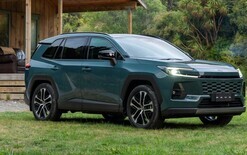


UK sales surpass 2 million
New-car sales in the UK have increased for the third consecutive year after breaching the two million mark for the first time since the Covid-19 pandemic.
The 2,020,520 new car registrations in 2025 was up 3.5 per cent from 1,952,778 in the year before, according to the latest figures from the Society of Motor Manufacturers and Traders (SMMT).
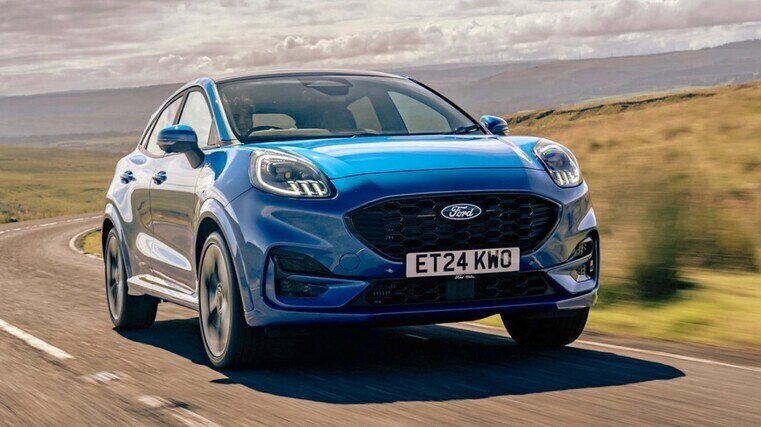
Ford’s Puma, pictured, was the top-selling model for the year with 55,488 units, followed by the Kia Sportage on 47,788 and Nissan’s Qashqai with 41,141.
Uptake in December also rose by 3.9 per cent year-on-year to 146,249 units, with the private buyer market delivering a final flourish as it rose 16 per cent.
Repeating a pattern seen in previous years, battery electric vehicle (BEV) registrations took a high market share in the final month of the year and accounted for 32.2 per cent of the market.
SMMT notes there was growth across all buyer types last year. Demand from private buyers rose 4.5 per cent from 2024 to 779,587 units, giving the sector a 38.6 per cent market share.
Fleet and business registrations also rose, up 2.6 per cent to 1,194,545 and 8.8 per cent to 46,388 respectively.
Hybrid volumes increased by 7.2 per cent to achieve a 13.9 per cent market share, while plug-in hybrids were the fastest growing powertrain, with volumes up 34.7 per cent to take 11.1 per cent of registrations.
Meanwhile, 473,348 new BEVs were registered last year – more than in the whole of 2021 and 2022 combined. This took the market share for BEVs to 23.4 per cent, which was below the government-mandated target of 28 per cent.
Mike Hawes, SMMT chief executive, says: “The new car market finally reaching two million registrations for the first time this decade is a reasonably solid result amid tough economic and geopolitical headwinds.
“Rising EV uptake is an undoubted positive, but the pace is still too slow and the cost to industry too high.
“Government has stepped in with the Electric Car Grant, but a new EV tax, additional charges for EV drivers in London and costly public charging send mixed signals.
“Given developments abroad, government should bring forward its review and act urgently to deliver a vibrant market, a sustainable industry and an investment proposition that keeps the UK at the forefront of global competition.”