


New cars lead demand
New-vehicle registrations came in at 11,806 units last month for an increase of 960, or by 8.9 per cent, compared to January last year.
The result suggests a firmer start to 2026 for the market with growth led by light models, reports the Motor Industry Association (MIA).
While overall volumes were higher, the pattern of demand suggests the new-vehicle sector is rebuilding gradually rather than accelerating with gains concentrated in specific segments and buyer types.
Aimee Wiley, the MIA’s chief executive, says last month’s outcome points to improving conditions while highlighting the need for caution.
“January has opened the year on a stronger footing than the same month of last year with growth coming through most clearly in light passenger vehicles. The increase was supported by higher rental registrations and steady business demand. Private registrations were slightly lower.
“These results indicate improving conditions, but the market continues to remain sensitive to broader economic and confidence settings.”
There were 761 new battery electric vehicles (BEVs) sold in January for 6.4 per cent of the market and higher than the same month in 2025. The most popular model was BYD’s Atto 1 on 94 units.
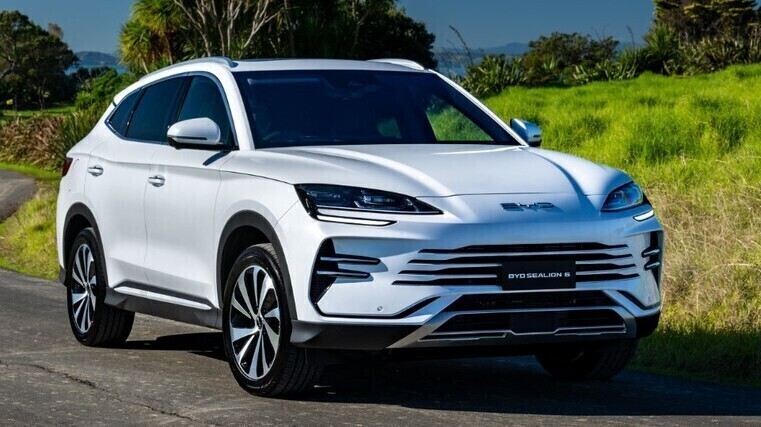
Plug in hybrids (PHEVs) notched up 738 registrations and 6.3 per cent of the market. The BYD Sealion 6, pictured above, was the best-seller with 86. Hybrid electric vehicles accounted for 3,312 registrations and 28.1 per cent, with Toyota’s RAV4 leading the way with 641 units.
Electrified models, comprising BEVs, PHEVs and hybrids, totalled 4,811 units in January, representing 40.8 per cent of new-vehicle registrations. Within the light passenger segment, they accounted for just over half of sales.
In the light-commercial segment, electrified vehicles represented a smaller share of demand at 9.8 per cent compared with 25.9 per cent in the same month of last year.
Demand strength was more evident in rental and business channels during January, while private registrations remained softer.
This was consistent with recent months, indicating the market is continuing to stabilise gradually rather than shifting into a stronger growth phase.
There were 9,036 light passenger vehicles, including SUVs, sold in January. That was up by 986 units or 12.3 per cent compared with January 2026. The increase was driven by stronger rental and business registrations, with SUVs continuing to account for the largest share.
As for light commercials, 2,359 units were registered – up by 26 units or 1.1 per cent. Business demand continued to dominate this segment with volumes broadly stable.
Heavy commercials came in at 41, down by 52 units or 11.2 per cent. Sales decreases were recorded across both business and government channels.
Published economic forecasts continue to point to a gradual improvement in conditions through 2026, supported by easier interest-rate settings and firmer business confidence. Labour-market conditions remain an important influence on decisions with household spending.
Wiley says: “For the automotive sector, this backdrop is consistent with improving but uneven demand where business and fleet activity provides stability, while household purchasing remains cautious.”