

F1 inspires hybrid supercar
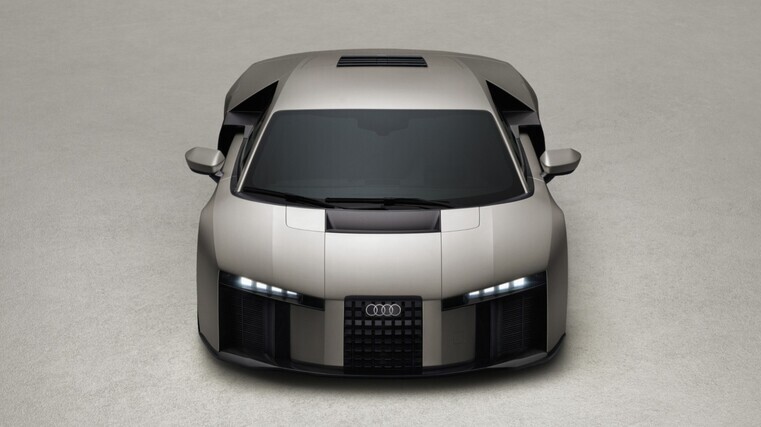
Audi has unveiled its first supercar with a high-performance hybrid powertrain but will only be producing 499 units, with deliveries due to start in the first half of 2027.
The Nuvolari has a system output of up to 736kw, produces a top speed of more than 350kph and is set to become the most powerful and fastest production vehicle from the four rings.
It accelerates from 0-100 kph in 2.6 seconds and reaches 200kph in 6.8 seconds thanks to innovations inspired by Formula 1, including a high-performance hybrid powertrain, quattro predictive ride, active aerodynamics and a new Audi Space Frame (ASF) with carbon exterior.
Gernot Dollner, chairman of Audi AG’s board of management, says: “With the Audi Nuvolari, we are accelerating technological progress.
“It shows what is possible when the focus is on technology, performance and execution through teamwork – and when we achieve progress together.”
The supercar has a mid engine layout and the exterior features Audi’s new signature colour, Titanium, a paint also used on the Concept C and the Audi Formula 1 race car.
The Nuvolari is powered by a hybrid high-performance powertrain that combines a 4.0-litre V8 biturbo engine delivering 588kW with three axial flux electric motors, each producing 110kW. The lithium-ion battery has a gross capacity of 7.3kWh.
The combustion engine delivers a maximum torque of 730Nm and reaches up to 10,000rpm – a range previously reserved for motorsports.
Two oil-cooled axial flux electric motors at the front axle deliver up to 2,150Nm of torque. A third electric motor between the V8 mid-engine and the transmission completes the drive concept.
Driving modes
Four driving modes are available and these prioritise powertrain, vehicle dynamics and efficiency differently.
E-Hybrid enables fully electric driving for urban and short-distance use; balanced combines comfort, efficiency, and performance; Dynamic sharpens system response and enhances agility and precision; and Dynamic+ focuses the powertrain entirely on an emotional driving experience.
Vehicle dynamics can be further refined in Track Mode, which enables targeted adjustment of traction control to driving style and available grip.
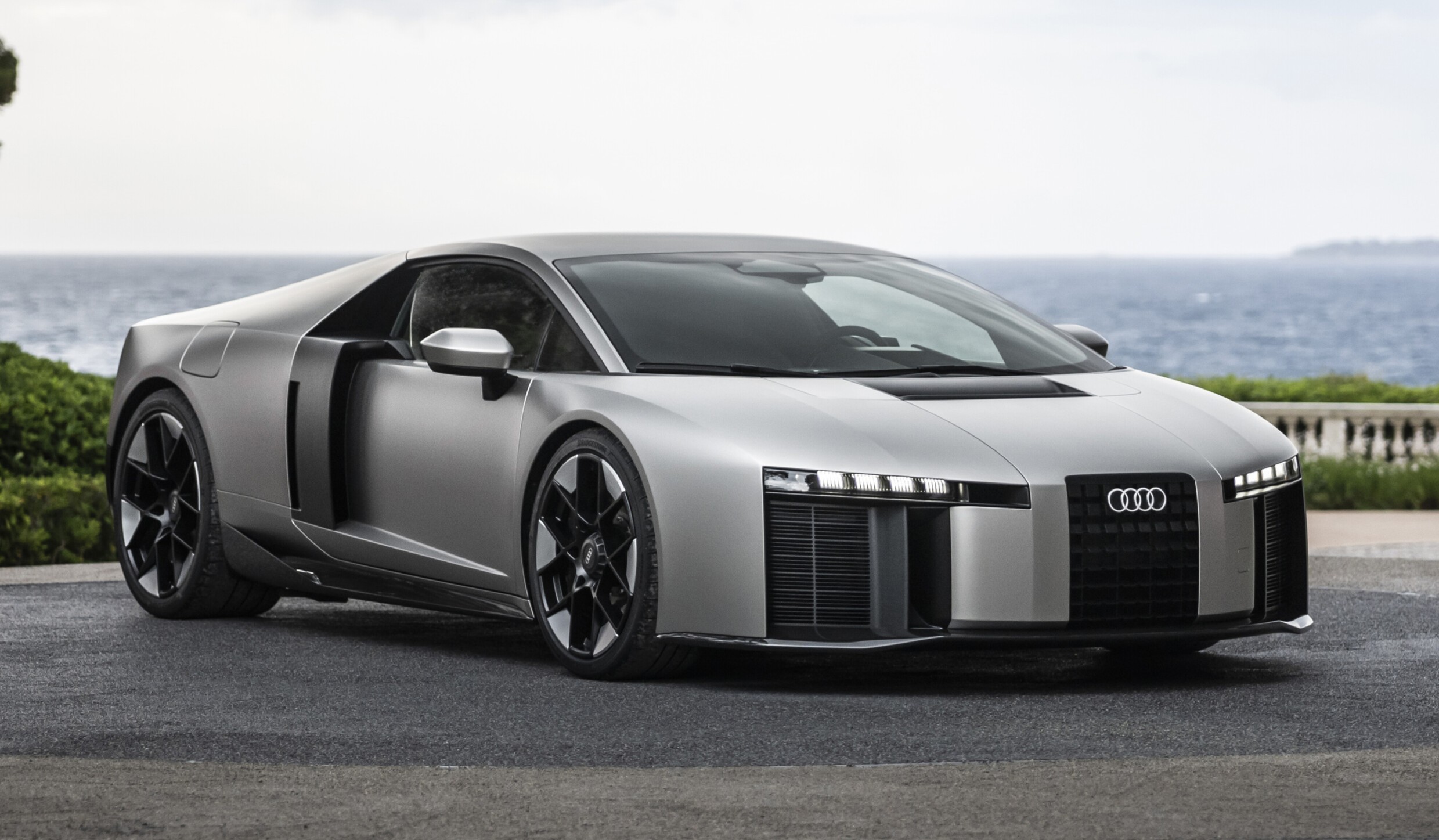
The ASF with carbon exterior combines low weight with high structural strength, and almost all exterior components are made from carbon fibre reinforced polymer.
Active aerodynamics have been inspired by Formula 1, with the vehicle boasting a system that adjusts downforce, drag and aerodynamic balance in response to driving conditions to ensure maximum stability.
Audi says each exterior element serves a defined aerodynamic function, from the front splitter to the rear diffuser. Audi’s Formula 1 drivers provided targeted feedback during the development phase to fine-tune aerodynamic performance.
Front air intakes ensure effective brake cooling as well as efficient thermal management of the combustion engine and hybrid components. A vented front end, known as an S duct, improves aerodynamic efficiency at the front axle – delivering additional downforce, reducing lift at high speeds, and improving cooling of the powertrain.
The central element of the active aerodynamic system is the deployable adaptive rear wing, which controls downforce and drag.
The energy management system of the Nuvolari is also inspired by motorsport, with its boost and recuperation strategies closely linked to torque distribution.
As an integrated system, it continuously manages the interaction between power delivery and energy recovery – adapting to driving conditions, grip level and driver intent.
Adaptive strategies for coasting and brake recuperation extend energy recovery to nearly all driving phases. At the front axle, electric deceleration takes on a significant portion of braking, while at the rear axle, coasting, partial load and traction control phases are used for recuperation.
On the inside
The Nuvolari’s interior concentrates all controls on essential functions and positions them directly within the driver’s field of view, including key elements of the human machine interface (HMI).
Colour accents in the HMI are a nod to the legendary Auto Union Type C race car, referencing the motorsport era of the 1930s, which was dominated by historic speed records.
This functional use of colour continues in the overall interior concept, dividing the cabin into two zones. The front section is finished in a deep, dark tone, designed to support concentration, while the rear section introduces a lighter tone.