


Companies extend partnership
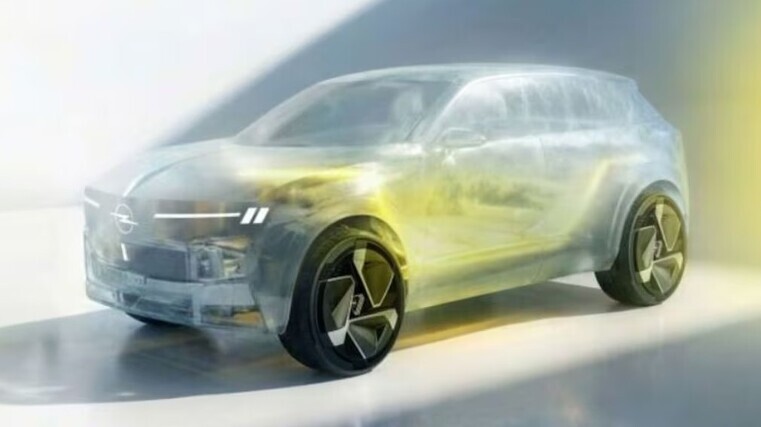
Stellantis and Leapmotor are expanding their joint venture with plans to build a fully electric SUV in Spain.
There is also potential to transfer ownership of a factory in Madrid into the partnership, which would extend a collaboration that has made Leapmotor the fastest-growing Chinese marque in Europe.
The two companies intend to expand co-operation through manufacturing, purchasing and supply-chain integration. This would build on the momentum of Leapmotor International, the joint venture they set up in 2023.
Antonio Filosa, chief executive of Stellantis, says: “This plan is expected to support production and advance localisation in Europe of world-class manufacturing of EVs at affordable prices.”
His counterpart at Leapmotor, Zhu Jiangming, adds the combination of his company’s technology with Stellantis’ global scale and European manufacturing heritage create “a powerful partnership”.
Spain is central to the plan and Stellantis will manufacture the new Opel electric SUV, pictured, at its factory in Zaragoza and allocate future Leapmotor models to the Villaverde plant in Madrid.
The deal advances Stellantis’ strategy of mating its European manufacturing scale with Leapmotor’s cost-competitive electric technology and access to China’s supply chain.
The Opel SUV will be built on a new assembly line in Zaragoza alongside Leapmotor’s compact SUV B10, which could enter production there as early as 2026. Production of the Opel could start in two years’ time.
Leapmotor will take the lead on the Opel’s drivetrain and battery systems, while Opel will focus more on design and driving dynamics.
By leveraging components accessed via Leapmotor International, Stellantis aims to position the new model as a more affordable entrant in Europe’s crowded compact electric SUV segment – an area in which pricing pressure from Chinese brands has intensified.
The extended partnership underlines Spain’s growing importance as an EV production hub and Opel’s shift toward fully electric model later this decade.
Under the plans, Villaverde could be allocated one or more future Leapmotor models for European and global markets, with manufacturing potentially starting in the first half of 2028.
The vehicles would be produced in line with upcoming European origin rules and sold by Leapmotor International in Europe, the Middle East and Africa.
Stellantis says it’s also discussing possibly transferring ownership of the plant in Madrid to Leapmotor International’s Spanish subsidiary. Such a move would mean deeper level of integration than initially envisioned when
Leapmotor International was set up in October 2023. Stellantis acquired around 21 per cent of Leapmotor at that time.
Beyond manufacturing, the two companies plan to broaden joint purchasing activities through Leapmotor International. The goal is to use the combined scale of the two groups to lower component costs for battery EVs in Europe.
The approach combines access to China’s EV supply base with European sourcing to improve resilience. For Stellantis, the purchasing alliance could become a key lever in keeping prices competitive without margins suffering.
Since launching the C10 and T03 in Europe two years ago, Leapmotor International has established more than 850 sales and service points, and sold in excess of 40,000 units there in 2025.