


Ban for hidden EV door handles
China is planning to ban concealed door handles on electric cars for safety reasons, becoming the world’s first country to outlaw a design popularised by Tesla.
Vehicles sold there will be required to have mechanical releases on the inside and outside, according to new rules issued by the Ministry of Industry and Information Technology on February 2.
The ruling will take effect on January 1, 2027. Models already approved by the regulator that are in the final stages of launching in China have until January 2029 to comply.
The crackdown follows several high-profile incidents, including two Xiaomi EV crashes in the country. It’s suspected power failures prevented the doors from opening, leaving people unable to escape or be rescued.
While the regulations will only impact EVs sold in China, the country’s influence on the global car industry means it could resonate elsewhere. Tesla’s doors are already the target of a safety probe in the US and European regulators are considering action.
About 60 per cent of the top 100-selling new-energy vehicles in April last year featured concealed handles, according to China Daily. Redesign efforts will be heavily focused on carmakers’ higher-margin luxury models.
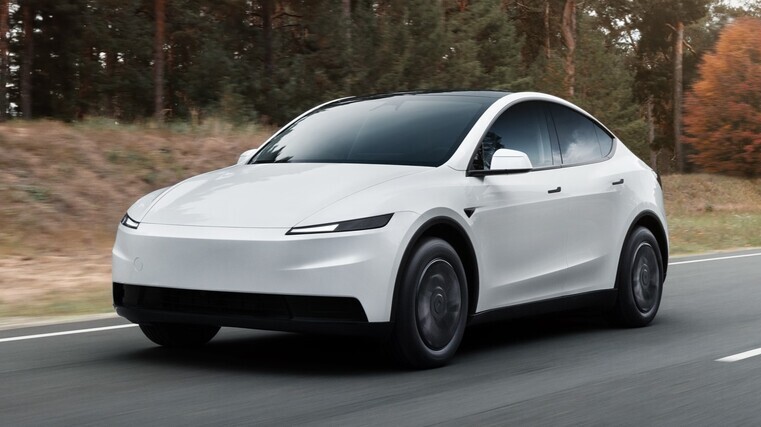
That includes Tesla’s Model Y, pictured above, and Model 3, and BMW’s iX3, which is set to see a China version make its debut in 2026.
Nio’s ES8, Li Auto’s i8, and Xpeng’s P7 also feature the handles. Xiaomi’s YU7 SUV, launched in June 2025, will need an overhaul.
China’s examination of standards began in July 2024 and its new rules are specific. On the door’s exterior, there must be a recessed space measuring at least 60mm by 20mm for a hand to grasp a handle.
Inside, vehicles must have signage measuring at least 10mm by 7mm indicating how to open the door. The regulation also states where handles and signs should be placed.
The new rules in China mean existing safety features, including mechanical pull-cables and back-up door batteries that allow for opening even when other power is lost, are likely to become redundant.
In other markets, some models combine electric and manual systems in the same handle. This allows people to open a door with a hard yank.
Chinese carmakers are leading revamp efforts. Already some models, such as Geely’s Galaxy M9 and BYD’s Seal 06, have reverted to traditional, exposed handles.
Tesla says it will make changes for China, and its comment in relation to scrutiny in America offers some clues. It will make the manual release mechanism more intuitive and is considering programming the locks to open automatically when battery voltage is low.
For carmakers, the door-handle rules represent a historic shift in global safety standards, with China – not the US or Europe – increasingly the dominant force.
While door handles have caught much of the public’s attention, the country’s Ministry of Public Security also plans to limit how quickly cars can accelerate from a standstill, and authorities are ramping up their oversight of advanced driver-assistance systems.